Why Ruby Ovens Don’t “Overshoot” Your Temperature
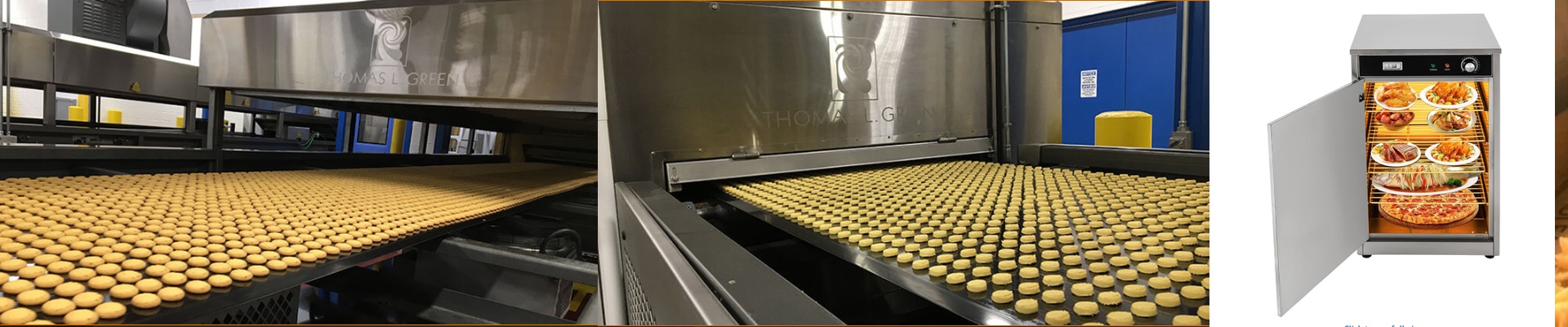
If you’ve ever used a standard oven, you know the struggle. You set a temperature, the elements get screaming hot, and then—even after the power clicks off—they keep pumping out heat. That lag is what engineers call “thermal inertia,” but in the kitchen, we just call it a ruined dish. It’s that annoying temperature swing that pushes your food past the perfect point.
The Magic of Halogen IR
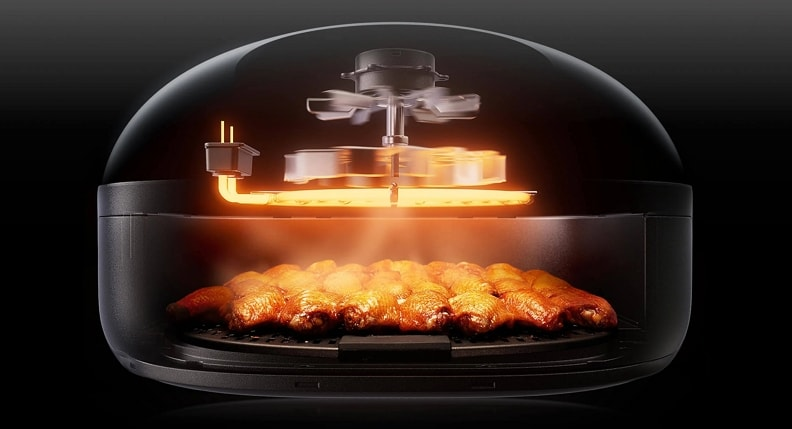
We do things differently with Ruby ovens. Instead of those heavy heating coils, we use short-wave halogen bulbs. Here is the secret: these lamps don’t bother heating up a big chunk of metal first. They just shoot infrared radiation straight at the target. It’s almost instant. The response time is measured in seconds. The moment your controller hits the target temperature and cuts the power, the heat stops. No lingering warmth. No “swing.” Just a tight, steady window of heat that stays exactly where you want it.
The Nitty-Gritty Hardware
To make this work, we use quartz glass. It has to be tough to handle the insane pressure and heat inside the bulb. We also pack a ton of wattage into a tiny space, which is why you get so much power from such a small lamp. But you can’t just wing it with the installation. You have to be precise with the wiring. Since these bulbs get incredibly hot, the sockets need to be heavy-duty, or they’ll literally melt. And please, don’t try to swap these for generic bulbs. If the voltage is even slightly off, you’ll burn through the filament in a matter of hours.
The Reality Check
Precision isn’t free. Because short-wave IR is so aggressive, positioning is everything. If a lamp is too close to the food or the oven wall, you’re going to get scorched spots. It happens. To fix that, we spend a lot of time calibrating the airflow and shielding. It’s all about making sure that intense heat spreads out evenly across the surface rather than hitting one spot like a laser.