
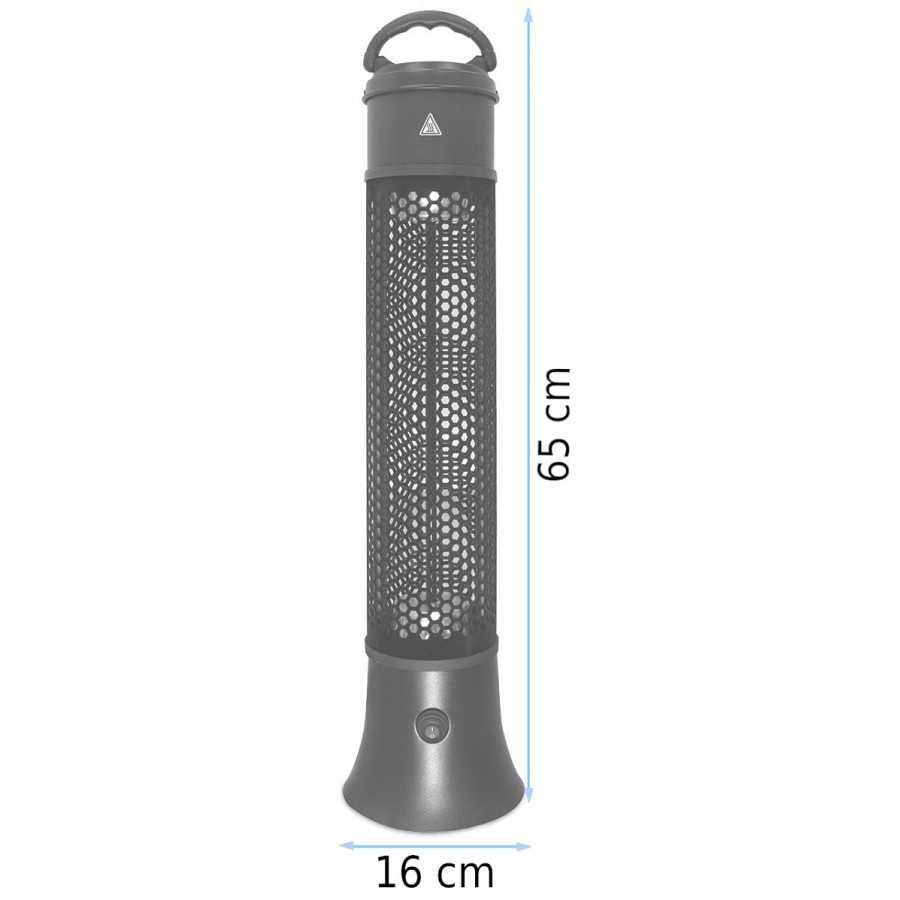
Why we put our bathroom heaters through “damp-heat” torture tests
Let’s be honest: bathrooms are a nightmare for electronics. You’ve got thick steam, random water splashes, and temperature swings that would make a weather forecaster dizzy. We could just build these heaters, box them up, and hope for the best. But we don’t. Instead, we put every batch through a “damp-heat aging test.” Basically, we try to break them before they ever reach your house, so they don’t just quit on you after a month of morning showers.
The battle between heat and humidity
Here is the problem. When you flip the switch on a shortwave infrared lamp, that quartz tube gets screaming hot in a matter of seconds. Now, imagine a couple of cold water droplets hitting that roasting tube. That kind of sudden shock creates a lot of stress on the material. Even worse, moisture loves to find a way in. If a seal isn’t perfect, water creeps toward the electrical terminals. That’s how you get rust, corrosion, or—worst case—a dead short.
How we actually test them
We don’t just spray them with a hose. We use humidity chambers to simulate years of wear in a fraction of the time. We cycle the heaters from hot to cold over and over again while they’re soaked in moisture. We’re looking for three main red flags: *The seals: Does the rubber or silicone warp and shrink once it’s been heated and cooled a few dozen times? *The connectors: Are the terminals starting to rust or lose their grip? *The insulation: Does the electricity stay where it belongs, even when the housing is damp?
The balancing act
You might think, “Just seal it airtight!” But there’s a catch. If we make the waterproofing too tight, the internal electronics can’t breathe. They’ll overheat and fry themselves. It’s a constant balancing act—keeping the water out while letting enough air in to keep the guts of the machine cool. That’s why we share our actual test reports. “Water-resistant” is a word anyone can throw around. It doesn’t mean much. But showing you exactly how many hours a unit survived in a 95% humidity chamber before any voltage leaked? That’s real. That’s how we know your heater isn’t going to give up the ghost the first time things get steamy.