
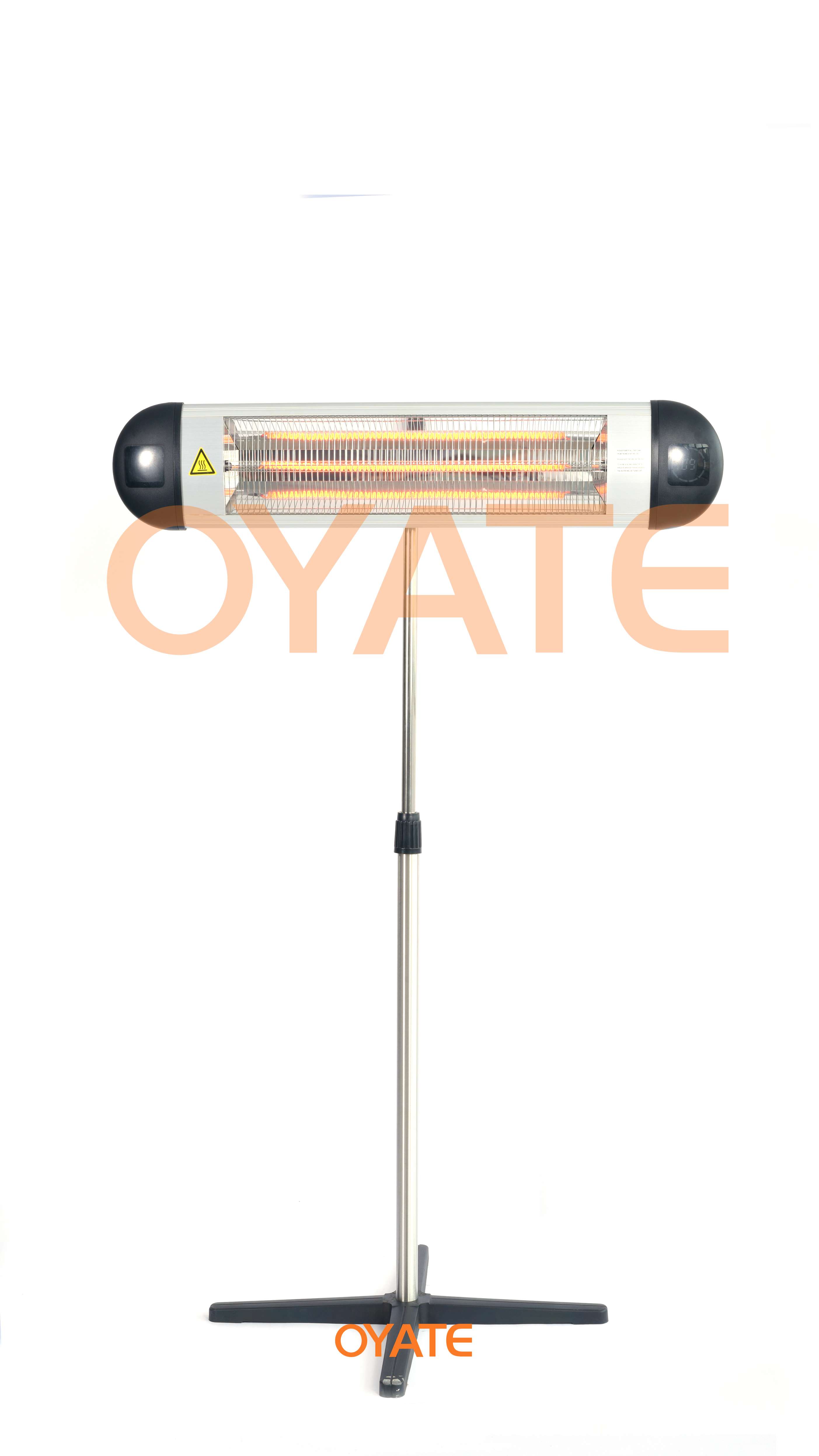
Why Your Bathroom Heater Needs Explosion-Proof Quartz
Let’s be honest: putting a high-heat infrared heater in a bathroom is a bit like playing with fire—literally. The real danger isn’t just the heat itself. It’s what happens when that heat meets a splash of cold water. If you use a standard quartz tube, a few stray droplets from the shower can be a disaster. When cold water hits glass that’s glowing at several hundred degrees, the glass doesn’t just crack. It can shatter. Hard. That’s why we stick with explosion-proof quartz. The “Thermal Shock” Problem Here is the thing about glass: it hates sudden changes. In a steamy bathroom, a single drop of water creates a tiny, freezing cold spot on a scorching hot surface. This creates a massive amount of tension inside the glass. One second it’s warming you up, and the next, it’s popping. To stop this, we use reinforced quartz or a special protective layer. It helps the tube handle that stress without giving up the ghost. What’s Actually Inside? When we talk about “explosion-proof,” we aren’t talking about armor. It’s usually a dual-layer design or a coated filament made from high-purity silica glass. This stuff is built to be turned on and off rapidly without cracking. We also make sure the filament is perfectly centered. If it’s off-center, you get hot spots, and hot spots lead to failure. Plus, we use moisture-resistant seals on the wiring. Because, let’s face it, humidity eats electrical connections for breakfast. The Trade-off Nothing is perfect. Those protective coatings do change how the heat comes off the tube. You might notice it’s not quite as intense as a bare, uncoated tube. But here’s the reality: in a home bathroom, you don’t need industrial-strength drying power. You just want to feel warm without worrying about the heater exploding in your face. I’ll take a tiny bit less heat over a shower full of glass shards any day. One quick tip if you’re installing these:check your venting. Even the toughest glass can’t save you if the housing is choked. If the air can’t move, the heat builds up in the chassis and fries your wiring long before the tube ever has a chance to fail. Give it room to breathe.